> For the complete documentation index, see [llms.txt](https://zeroliquid.gitbook.io/zeroliquid/llms.txt). Markdown versions of documentation pages are available by appending `.md` to page URLs; this page is available as [Markdown](https://zeroliquid.gitbook.io/zeroliquid/protocol/zeroliquid-protocol.md).
# ZeroLiquid Protocol
The ZeroLiquid protocol enables users to obtain self-repaying, 0% interest loans on LSD tokens without any liquidation risk.
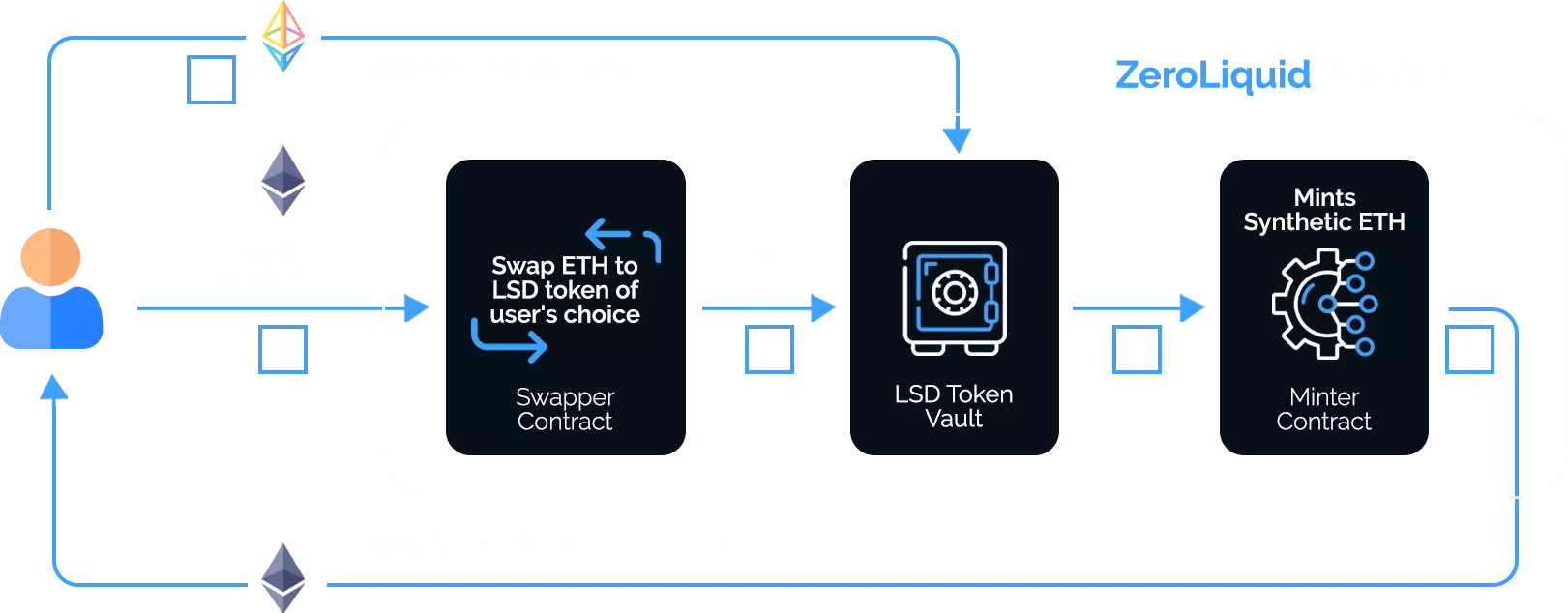
1. A user deposits an LSD token such as stETH into ZeroLiquid. Alternatively, they can supply ETH and the protocol will convert it to the user's preferred LSD token.
2. The user can then borrow against their LSD tokens at a LTV (loan-to-value) ratio of up to 50%. Users receive the loan in zETH (ZeroLiquid's synthetic ETH). zETH is pegged to the price of ETH and can be traded in the liquidity pools created and incentivized by ZeroLiquid.
3. The protocol periodically harvests staking rewards, which are credited on a proportional basis to users, reducing their outstanding debt.
4. Users have the option to repay any amount of their debt at any time, allowing them to reclaim their collateral. To do so, users can deposit either the LSD token they used as collateral, or zETH.
5. Users can liquidate a portion or all of their collateral at any time.
**"User's only debt is Time."**